[PR] INTERCIDS, the Spanish Association of Legal Professionals for Animal Protection, which drafted the legislative proposal to ban octopus farming in Spain, currently registered as a Bill before the Congress, welcomes Nueva Pescanova’s decision to withdraw its plans to establish an octopus farm in Gran Canaria.
INTERCIDS congratulates all the organisations that have worked tirelessly to achieve this outcome, as well as the public authorities in the Canary Islands whose rigorous scrutiny prevented the project from moving forward. Thanks to the sustained efforts of organisations that demonstrated the strong opposition of both the public and the scientific community to the project, together with the diligence and careful approach of the authorities in assessing the serious risks the proposed farm would have posed to the Canary Islands’ environment, marine ecosystems and biodiversity, Nueva Pescanova has decided not to proceed with its plans to establish an octopus farm in Las Palmas de Gran Canaria.
The association of lawyers, judges, prosecutors and law enforcement agents considers this decision to be a significant step forward for the protection of octopuses and, more broadly, for marine conservation. It also underscores the serious ethical concerns, as well as the environmental, social, public health and biodiversity risks inherent in intensive octopus farming—particularly given that octopuses are carnivorous animals.
However, INTERCIDS warns that the withdrawal of this project does not eliminate the risk that Nueva Pescanova or other companies may seek to develop similar facilities elsewhere in Spain, where public authorities may prove less rigorous in safeguarding biodiversity, the environment and public health. For this reason, INTERCIDS reiterates the need to adopt a clear nationwide legal ban on octopus farming before any similar projects are able to materialise.
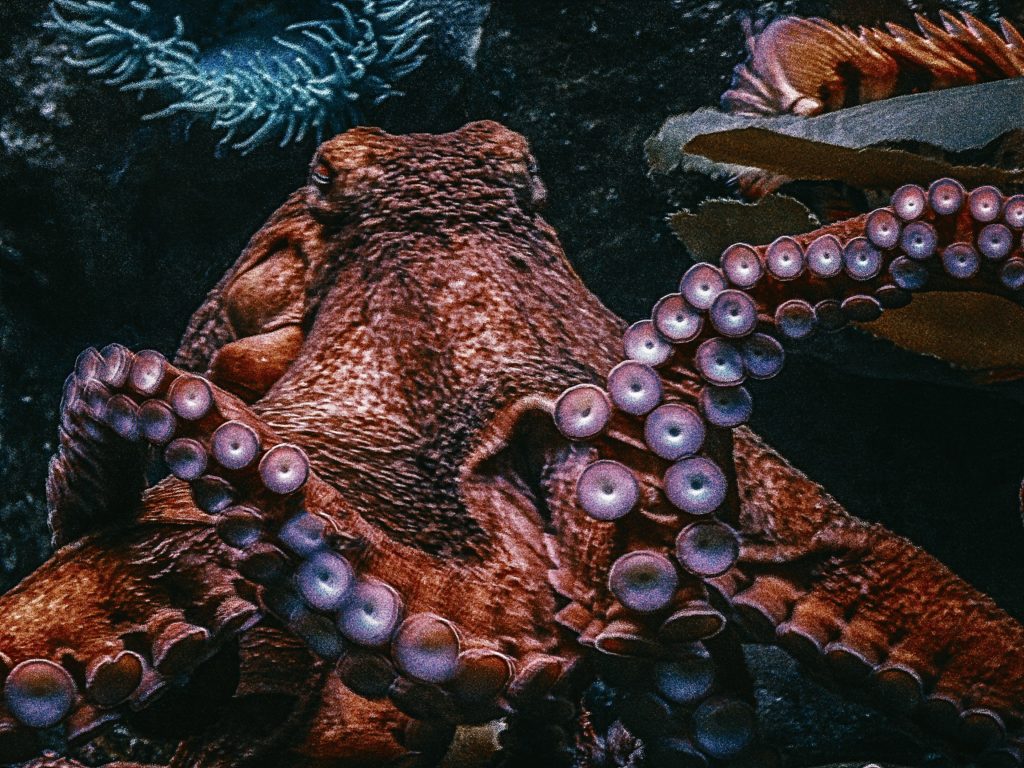
The organisation also stresses that “the octopus is a unique, highly intelligent animal with extraordinary abilities that naturally lives a solitary life. Removing it from its natural marine habitat and free-living state in order to confine it in the crowded, sterile tanks of intensive farming facilities would be an aberration.”
“This is undoubtedly very positive news, but the threat does not go away simply because one company has abandoned its attempt to secure authorisation for an octopus farm in one particular location. What truly matters is ensuring that no company is ever able to pursue the same objective anywhere else in Spain,” the organisation states.
A Legislative Bill Pending Parliamentary Consideration
Following meetings with government ministries and members of parliament, INTERCIDS submitted, in May 2025, a legislative proposal to prohibit the intensive farming of octopuses in Spain, making it the first legal initiative of its kind in Europe. The proposal is currently registered as a Bill before the Spanish Congress of Deputies. It responds to the growing scientific consensus regarding the advanced cognitive abilities of octopuses and their capacity to suffer, as well as the absence of husbandry methods compatible with their welfare in intensive production systems.
Numerous scientific studies have concluded that octopuses are solitary, highly intelligent animals with complex behavioural needs that are fundamentally incompatible with confinement in industrial farming facilities. In addition, there are currently no slaughter methods for octopuses capable of preventing prolonged suffering before death. The environmental impact of octopus farming would also be considerable, given the vast quantities of wild fish required to feed a carnivorous species. Waste generation, pollution and contamination of marine waters are further causes for concern. Intensive confinement at extremely high stocking densities, combined with the routine use of antibiotics and antivirals, also creates conditions that may facilitate the emergence of novel or drug-resistant pathogens, posing additional risks to both animal and public health.
For INTERCIDS, Nueva Pescanova’s decision to withdraw its project represents both an opportunity and a call to action for Spain to take the next step and become the first country in the world to explicitly prohibit octopus farming.
“This is the moment to definitively close the door on an industry that is incompatible with current scientific knowledge, with society’s growing concern for animal welfare, and with the urgent need to protect our already fragile oceans,” the organisation concludes.