Press Release: The association INTERCIDS, Legal Advocates for the Animals, warns that zoos’ business model, based on the exhibition of animals and their captive breeding, has no place in the future Great Apes Law.
On Friday January 16th, the Iberic Association of Zoos and Aquaria (AIZA, by its Spanish acronym), who mainly represents the interests of businesses that exploit animals in zoos, held a session titled “Science, laws and great apes: towards evidence-based regulation” at the Congress of Deputies.
The session took place while the Ministry of Social Rights is finalizing the draft bill for the future Great Apes Law, through the Directorate – General of Animal Rights. In July 2024, INTERCIDS, in collaboration with Franz Weber Foundation, submitted a draft proposal, serving as the basis for the Ministry’s draft to start working on such an important legislative project.
The goal of the proposal was to strengthen the legal protection of these animals who have feelings and are highly social, acknowledging their rights, guaranteeing compassionate conservation, and reducing their objectification and suffering. Something that, according to INTERCIDS, is incompatible with captivity and exhibition, common conditions in current zoos.
The exhibition of great apes in zoos is contrary to their protection
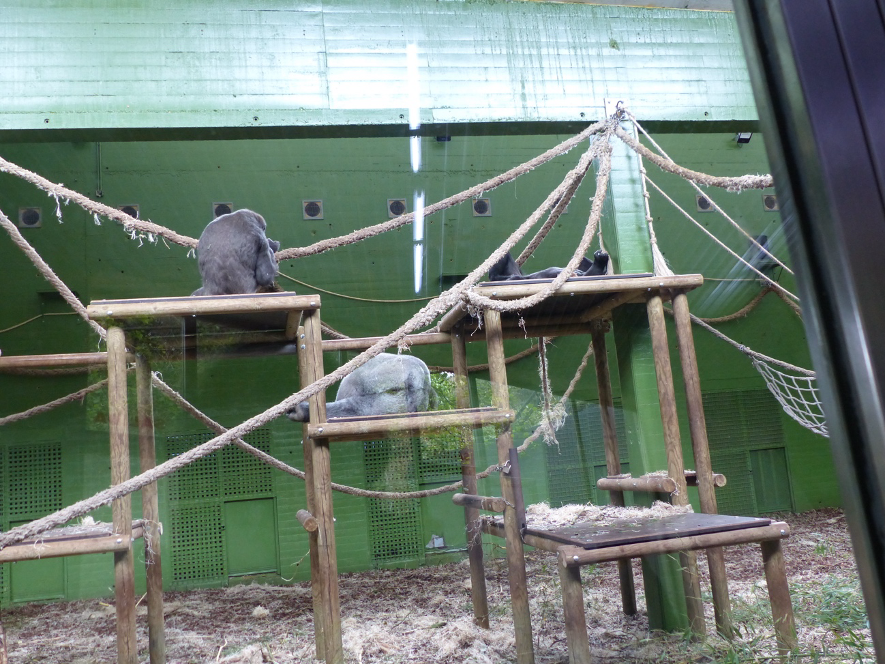
Zoos are usually private companies whose business model is based on the permanent exhibition of wild animals. To be supported financially, given their lucrative nature, many of these parks organize shows with animals, and encourage visitors to take pictures, feed the animals, and transit in vehicles throughout some of the wildlife facilities.
“Citizens must know that animal exhibition involves the constant need of breeding and transferring among zoos: it’s a vicious cycle inherent to the zoo model itself, perpetuating captivity of wild animals”, warns INTERCIDS. Its proposal gathers the recommendations from the International Union for Conservation of Nature (IUCN), against apes’s captive breeding for conservation purposes.
Zoos’ false conservation claims
One typical argument from zoos is that they work as a «Noah’s Ark” to preserve genetically viable populations. However, in many cases, the real genetics of the individuals is unknown and hybridization problems are frequent.
The truth is that millions of animals of every kind live, reproduce, are transferred and die in their facilities. Very few animals born in zoos are reintroduced to nature. As for great apes, they can’t even get close to developing the complex natural behaviors inherent to their species.
The sector itself acknowledges its contradictions. The 2018 European Studbook of the chimpanzee from the European Association of Zoos and Aquaria (EAZA), states that it’s necessary to increase the breeding of chimpanzees to “satisfy the needs of exhibition from the zoos that are members of EAZA”. Regarding orangutans, EAZA’s best practices guidelines, recognizes an excess in males in European zoos, noting that “finding a place for young males is a problem for captive breeding programs”. There is a similar situation with gorillas, with a higher number of males in a reproductive status that can’t be located. INTERCIDS mentions the paradox: these species are endangered in nature, while zoos recognize an “excess” of individuals.
Scientific studies published by zoos are mainly in zoo magazines, and barely have a repercussion in the conservation of wild populations
Animal well-being can’t be guaranteed in zoos
Another recurrent argument from the sector is that animal well-being is guaranteed in zoos.
Nevertheless, the zoo associations themselves and scientists from the sector admit having significant knowledge gaps to understand and fully satisfy the physical, social and emotional needs of the animals. Moreover, in the case of great apes, several studies point out that captivity is, in and of itself, the main factor causing abnormal behaviors.
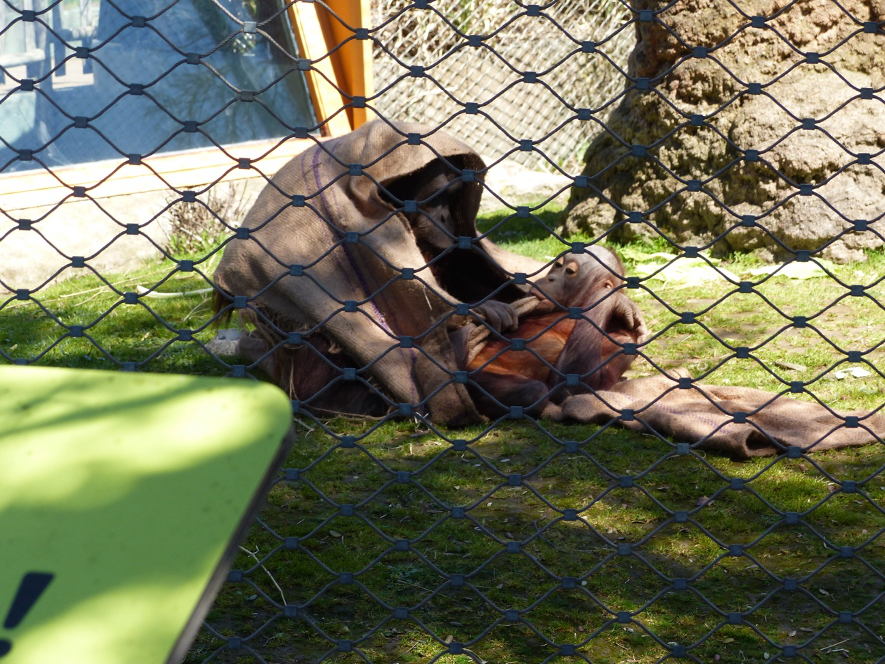
Orangutans’ case is paradigmatic. It’s an arboreal and semi-solitary species, to whom privacy is essential. In zoos, however, they are forced to live in reduced spaces, they stay most of the time on the ground, in unnatural social groups, and under constant exposure to the public.
Scientific evidence shows that great apes are self-conscious, they have the ability to think about the future, culture, and complex social systems. In zoos, these individuals show multiple physical problems -cardiac and respiratory diseases, overweight -, psychological and psychiatric problems – stress, anxiety, eating disorders, self injury.
Considering all of this, INTERCIDS is concerned about the danger of declaring zoos as a reference of scientific evidence in the debate concerning the Great Apes Law. The reality of these institutions is that they stay anchored in an obsolete business model, based on breeding and exhibition of wild animals, which inherently contradicts their protection. The entity hopes that the processing of the bill will continue without losing its essence and goals, acknowledging basic rights for great apes, prohibiting their exhibition and captive breeding, reinforcing strategies against illegal trafficking, and promoting protection and conservation projects in their countries of origin.
Servimedia: INTERCIDS alerta sobre la presión del lobby zoológico ante la futura Ley de Grandes Simios
La Zona Veggie: Alertan de la presión de los zoos ante la futura Ley de Grandes Simios
Noticias Ambientales: España debate sobre la Ley de Grandes Simios: la asociación INTERCIDS alerta sobre la presión del lobby zoológico
El Digital de Canarias: INTERCIDS alerta sobre la presión del lobby zoológico ante la futura Ley de Grandes Simios
DS Alicante: INTERCIDS alerta sobre la presión del lobby zoológico ante la futura Ley de Grandes Simios
Siglo XXI: INTERCIDS alerta sobre la presión del lobby zoológico ante la futura Ley de Grandes Simios